
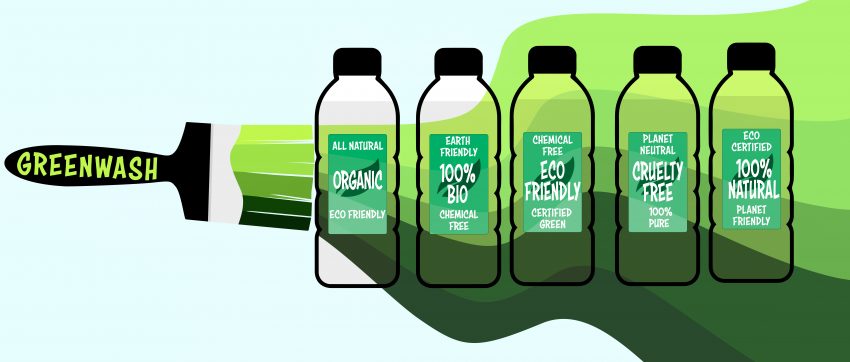
Sustainability communication is at a turning point. From 27 of September onwards generic sustainability claims without proof are prohibited at EU level under the Empowering Consumers for the Green Transition -directive (EmpCo)¹ and in Finland through Consumer Protection Act². EmpCo requires sustainability claims to be backed by robust, verifiable evidence and communicated in a way that is clear and understandable to the average consumer. That is a positive direction. At the same time, the directive still leaves room for interpretation.
The fundamental questions remain, does this solve the problem of greenwashing, and is it truly an effective way to drive the green transition? This blog explores
the changes that the new EmpCo directive requires firms to make. It also identifies two key challenges for business adaptation: interpretation and timing.
/*! elementor – v3.11.5 – 14-03-2023 */
.elementor-heading-title{padding:0;margin:0;line-height:1}.elementor-widget-heading .elementor-heading-title[class*=elementor-size-]>a{color:inherit;font-size:inherit;line-height:inherit}.elementor-widget-heading .elementor-heading-title.elementor-size-small{font-size:15px}.elementor-widget-heading .elementor-heading-title.elementor-size-medium{font-size:19px}.elementor-widget-heading .elementor-heading-title.elementor-size-large{font-size:29px}.elementor-widget-heading .elementor-heading-title.elementor-size-xl{font-size:39px}.elementor-widget-heading .elementor-heading-title.elementor-size-xxl{font-size:59px}
Why EmpCo?
Why are regulation of sustainability claims necessary? The answer is because of huge amount of unspecified and even false sustainability claims. EU Commission study in 2024 revealed that over 53 % of environmental claims were misleading³. Term “sustainable” is broad and, without further specification, undefined claim. As reflected in its name, the aim of the directive is to empower consumers to make informed, evidence-based sustainable choices while steering companies toward enabling those choices¹.
What Will Change?
At the heart of EmpCo lies a simple principle: If you cannot prove the claim in same media where the claim is made, you cannot use it.
General, vague claims such as “environmentally friendly,” “sustainable,” “natural” or “green” will no longer be acceptable unless they are backed with robust and recognized evidence. The risk of misbehavior is not only reputational, but companies that fail to comply with the requirements may face penalties of up to 4% of annual turnover.
EmpCo introduces several rules for sustainability claims. It should be noted that not only general environmental claims are prohibited, but also those related to social sustainability and animal welfare. The directive introduces several categories of prohibited practices that companies must carefully follow:
- General environmental claims unless an excellent level of environmental performance can be demonstrated. Excellent level of environmental protection is defined to fulfill EN ISO 14024 Type I certification, such as the Nordic Swan Ecolabel. Other recognised frameworks that fulfill this requirement include the EU Ecolabel, EU legislation (e.g. organic certification) and the Energy Labelling Regulation (EU) 2017/1369
- Sustainability labels not based on a certification scheme or not approved by public authorities
- Sustainability claims about the whole product or the whole company if the claim only concerns part of the product or the company’s operations
- General claims relating to social characteristics such as working conditions, fairness, ethical commitments or animal welfare without sufficient evidence
- Comparative claims without robust justification
- Carbon neutrality claims based on offsetting
- Future‑oriented claims without a clear, public, realistic and third‑party verified transition plan
The focus on prohibited practices may encourage companies to take the easiest route just to eliminate non-compliant claims instead of addressing the underlying sustainability challenges. Was this the intended outcome of the directive? Shouldn’t the priority be on steering companies toward sustainable solutions and make them affordable for consumers?
Short Term Question Marks
Despite its clear objectives, two key challenges remain: interpretation and timing.
Clarity, what is allowed to claim and what is not. General “how the average consumer perceives the claim” ⁴ leaves room for interpretation. While overall impression is a good guiding principle, it is difficult to apply in practice. When green and blue colour, leaves, forest and animals’ symbols are mentioned as implicit claims depending on circumstances⁴, it is hard to specify can you use those or not, especially when brand colour itself is green or blue. The fact that a claim is factually true does not make it permissible. It may still be too considered too general and therefore non-compliant⁴.
Timing: Although the directive has been in place since its publication, companies have largely awaited further implementation guidance. At the same time, multiple regulatory initiatives affect packaging and communication. For example, Packaging and Packaging Waste regulations (PPWR)⁵ affects also packages layout and all the new sorting instructions in packages need to be on the packages by 12th of August 2028. The EU labelling guidance will be finalized by 12 August 2026. It would be cost-efficient to make all the required changes at once.
The Finnish government proposes the longer transition period until 27th of March 2027 “to marketing that is included in a product or its packaging which was placed on the market before the Act has entry into force” ². In case of fresh products like ready-to-eat meals and fresh meat and vegetables where shelf life is maximum two weeks, this doesn’t help. The situation is different for non-food products and for foods with a longer shelf life.
Practical Examples
It’s clear that general claims like “less packaging material”, “natural”, “save nature” and all the company specific sustainability labels are prohibited. “Produced with renewable energy” is not ok, if it’s not specified “the factory where this yogurt is manufactured uses renewable energy”. Do these kinds of changes really lead to green transition? There remains way to use different claims without real sustainable change.
Claims about origin, like “Produce of Finland” are allowed. However, claims that something is a sustainable choice due to its origins can’t be made. ²
Even more nuanced is the interpretations of the EmpCo when writing about corporate sustainability strategies, values and when working towards targets in the beginning. The regulatory transition provides a unique opportunity to analyse how sustainability communication evolves in practice, particularly in packaging, marketing, and corporate strategy communication before and after the 27 September 2026. It’s left to see if the regulation makes the leaves drop from packages when autumn and wind of change comes.
In its best, EmpCo represents a fundamental shift in sustainability communication. It moves the focus from broad narratives toward precise, evidence-based claims, bringing much needed transparency. However, the implementation guidance remains far too unclear, and if the goal is to drive the green transition, relying primarily on bans on certain claims is insufficient. What instead is needed are concrete mechanisms that actively support and incentivise real changes in business practices.
References
¹Empowering
Consumers for the Green Transition -directive: https://eur-lex.europa.eu/eli/dir/2024/825/oj/eng
² Kuluttajansuojalain uudistaminen vihreän
siirtymän edistämiseksi https://oikeusministerio.fi/hanke?tunnus=OM033:00/2024
³ European
Commission. 2024. Environmental claims in the EU. https://op.europa.eu/en/publication-detail/-/publication/f7c4cb8b-f877-11ee-a251-01aa75ed71a1/language-en
⁴Questions
& Answers – Directive on empowering consumers for the Green Transition https://commission.europa.eu/topics/consumers/consumer-rights-and-complaints/sustainable-consumption_en
⁵Regulation
(EU) 2025/40 of the European Parliament and of the Council of 19 December 2024
on packaging and packaging waste https://eur-lex.europa.eu/legal-content/EN/TXT/?uri=OJ:L_202500040&pk_campaign=todays_OJ&pk_source=EUR-Lex&pk_medium=X&pk_content=Environment&pk_keyword=Regulation